How to Decontaminate a House: A Professional Guide to Meth Removal
Sometimes, you walk into a property and something just feels off. The walls look fine, the floors are swept, but an unexplainable chemical edge lingers in the air. That instinct matters. What you cannot see in a property can cause immense financial and physical damage.
Methamphetamine contamination is a widespread, invisible issue across New Zealand rental properties and family homes. Because meth residues absorb deeply into building materials, standard household cleaning is entirely ineffective. Worse, attempting a DIY cleanup can expose you to severe health risks.
Knowing how to properly decontaminate a house—and when to bring in the professionals—is the difference between a property that quietly puts occupants at risk, and one that is legally and genuinely safe.
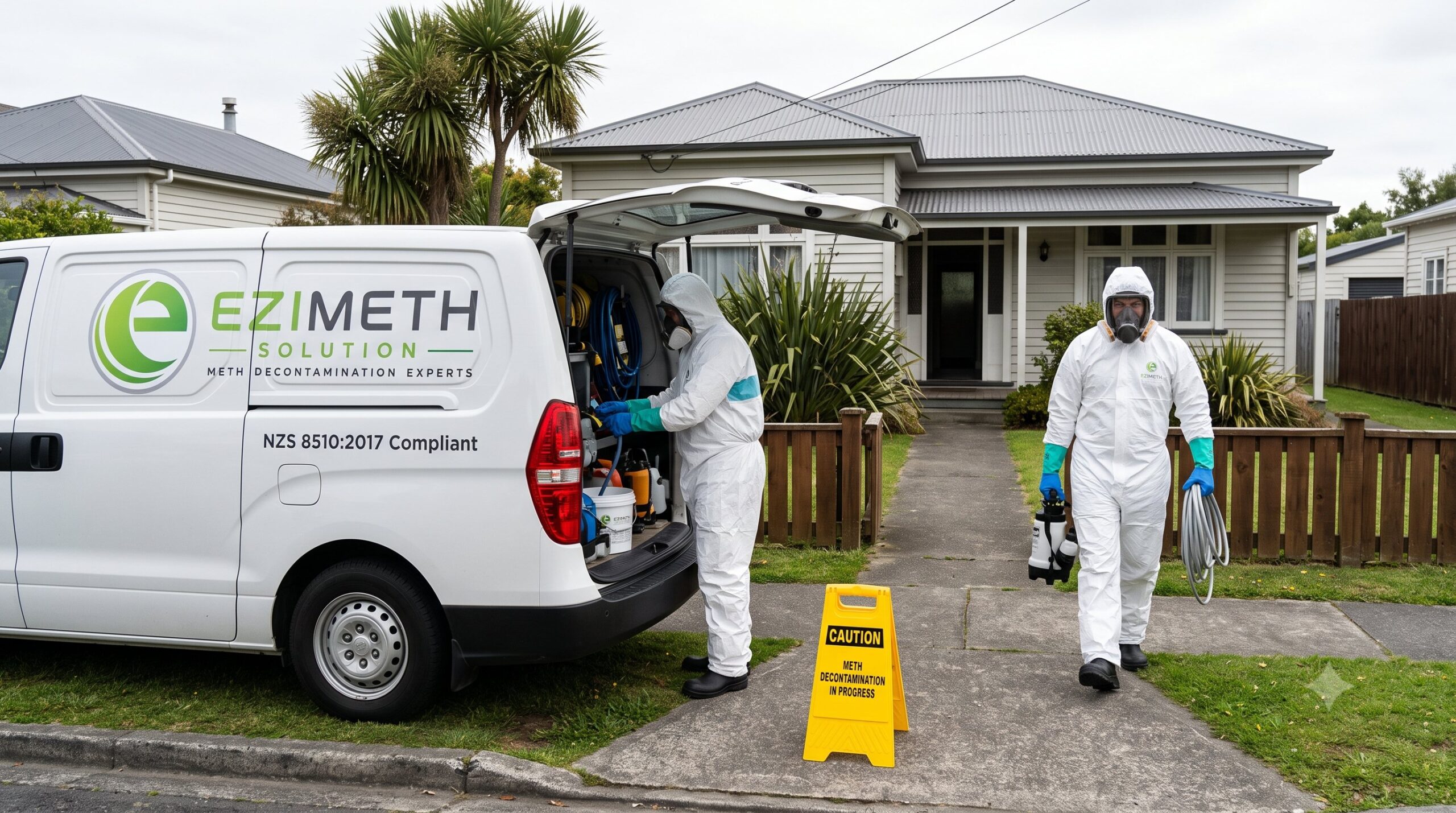
Here is the professional guide to how EZiMETH Solution handles meth decontamination, restoring properties to safe, NZS 8510:2017 compliant standards.
The Danger of DIY: Why Scrubbing Doesn't Work
A common, costly mistake property owners make is attempting to clean meth residue themselves. Methamphetamine vapour acts like smoke, settling on every surface and penetrating deep into porous materials like plasterboard, timber, carpets, and insulation.
- False Progress: Standard cleaning agents, bleach, or sugar soap will only clean the immediate surface layer. Within days or weeks, the meth residue trapped deep inside the walls will “sweat” back out, re-contaminating the surface.
- Toxic Reactions: Mixing standard household cleaners with clandestine drug residues can trigger violent chemical reactions, releasing highly toxic gases.
- Inadequate Protection: Hardware-store dust masks do not provide filtration against volatile organic compounds (VOCs) and chemical residues. Professional remediation requires full hazmat suits and commercial-grade respirators.
Proper decontamination isn’t a weekend project; it requires a scientifically structured approach.
The EZiMETH Step-by-Step Decontamination Process
At EZiMETH Solution, our remediation process is meticulous, transparent, and entirely aligned with the New Zealand Standard (NZS 8510:2017). Here is exactly what happens when we step in.
Step 1: Independent Baseline Testing
(The Pre-Requisite)
We operate with a strict conflict-of-interest-free approach. We do not test the homes we clean. Before we begin any work, an IANZ-accredited, independent testing agency must provide a comprehensive toxicology report. This data tells us exactly which rooms are contaminated and the concentration of the meth residue, allowing us to build a targeted, highly accurate Decontamination Action Plan.
Step 2: Site Security & Controlled Ventilation
Before a single drop of cleaning agent is applied, the property must be secured. We establish controlled access and set up commercial negative-air ventilation systems. This ensures that airborne chemical particulates are safely vented outside, preventing cross-contamination into unaffected areas of the home.
Step 3: Removal of Porous Materials
Certain materials absorb meth residues far too deeply to ever be safely cleaned. Attempting to save them is a waste of money and guarantees a failed clearance test. During this phase, we carefully strip and remove:
- Carpets and underlay
- Curtains, blinds, and soft furnishings
- Heavily contaminated wallpaper
- Exposed insulation
These items are wrapped, sealed, and disposed of strictly following New Zealand biohazard handling protocols.
Step 4: The Deep Chemical Wash & Extraction
This is the core of the remediation. We do not just wipe down walls; we use commercial-grade, specifically formulated chemical foaming agents designed to break down the molecular structure of methamphetamine.
- The foam is applied to ceilings, walls, floors, and fixtures. It clings to the surfaces, pulling the deeply embedded meth residues out of the plasterboard and timber.
- We follow a strict top-down, area-by-area cleaning sequence.
- The chemical slurry is then safely extracted, neutralised, and wiped away. For highly contaminated properties, this process is repeated multiple times.
Step 5: HVAC System Purging
A home’s heating and ventilation system is the lungs of the property. If a heat pump or ducting system is contaminated, turning it on will simply blow meth residue back into the newly cleaned rooms. We conduct specialised, deep-cleaning of heat pumps, filters, vents, and ducting to ensure no hidden residue recirculates.
Step 6: Post-Remediation Verification (PRV) Testing
Once our team completes the decontamination process, we step back. The independent, IANZ-accredited testing agency returns to the property to conduct Post-Remediation Verification (PRV) testing. They take new surface swabs to confirm that the methamphetamine contamination levels now fall below the safe, legal New Zealand threshold of 15 µg/100cm².
Step 7: The Compliance Certificate
If the property passes the PRV test, the final and most important step is completed. EZiMETH Solution issues a formal Clearance Certificate. This document proves that the property was professionally remediated and complies with NZS 8510:2017. This certificate is crucial—it carries real weight for restoring property value, satisfying insurance companies, and assuring future tenants or buyers that the home is 100% safe.
When to Call EZiMETH Solution
Decontaminating a house requires precise chemistry, heavy-duty equipment, and an unwavering commitment to safety. If you have received a positive meth test on your residential or commercial property, do not panic, and do not attempt to handle it alone.
By choosing EZiMETH Solution, you are partnering with certified professionals who prioritise your health, your budget, and a guaranteed clearance. Reach out to our team today for a confidential, no-obligation assessment of your decontamination needs.